
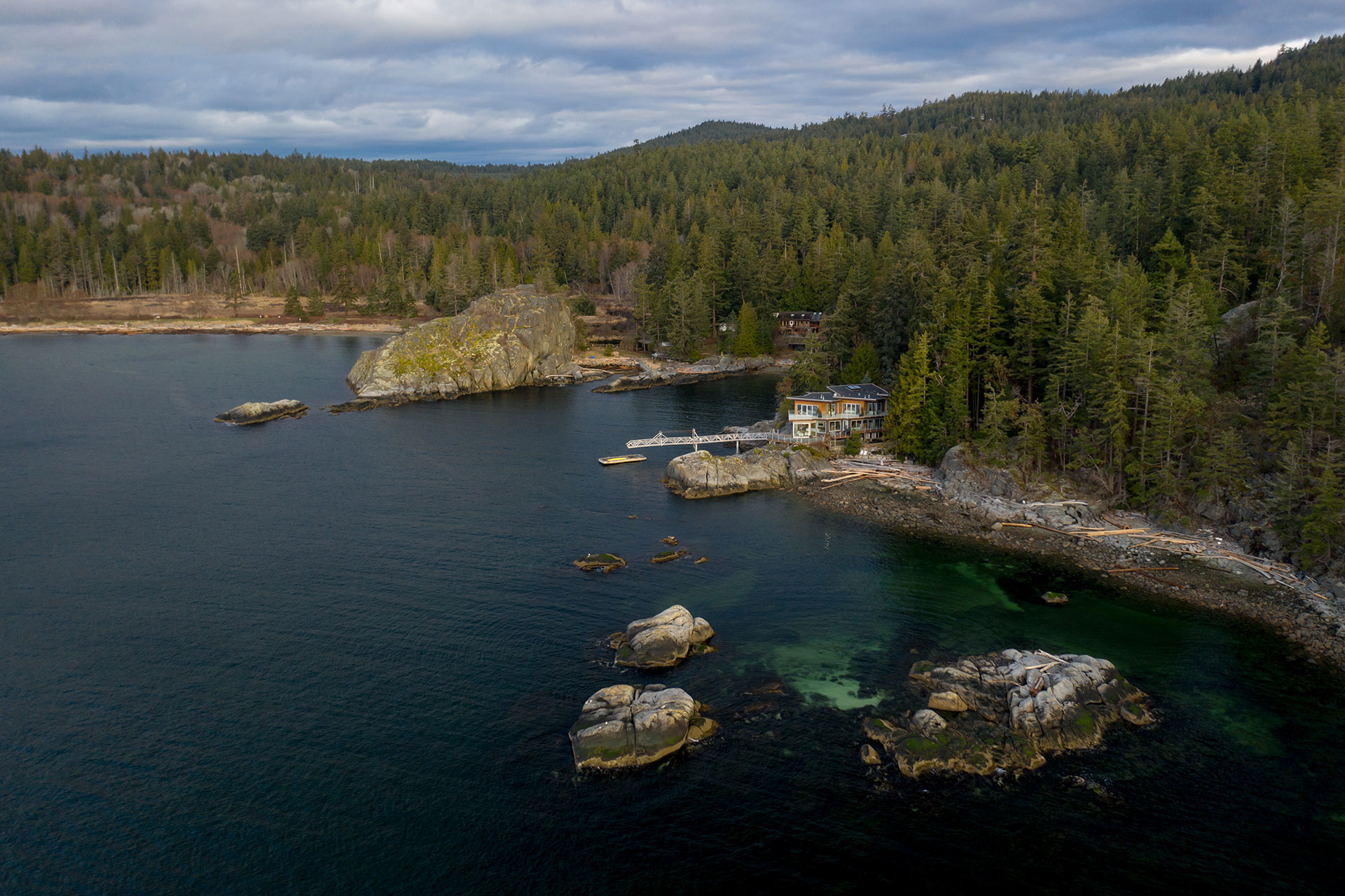
A recent article in the Coast Reporter highlights new University of Victoria research showing that drift logs — the large logs that wash up on B.C. beaches — are having significant impacts on rocky intertidal ecosystems. For many coastal residents, drift logs feel like part of the scenery, but the study confirms what we’ve been observing at the Pointhouse for years: these logs can reshape the shoreline, often in ways that aren’t beneficial for marine life.
What the Research Found
In the UVic study, researchers documented how storms and tides repeatedly move beached logs, grinding them over barnacles, algae and tide-pool communities. The results include:
-
Lower barnacle and invertebrate abundance on log-exposed shorelines
-
Reduced habitat for the small animals and shorebirds that rely on these communities
-
Higher evidence of logs originating from human activity
It’s a gentle but important reminder that even something as familiar as a beached log can have ecological consequences.
How This Relates to Pointhouse & Sargeant Bay
The Pointhouse shoreline is a unique pocket of Sargeant Bay. Our beach is partially sheltered by a chain of rocky islets that create a calm intertidal lagoon — an area that’s a haven for shorebirds, diving ducks, harbour seals, river otters and other wildlife throughout the year.
However, when southeast storm systems combine with high tides, logs rolling across the open bay can breach the islet “breakwater” and become trapped inside the lagoon. Once inside, the logs tend to stay, shifting with tides and storms and pressing against delicate habitat areas.
We’ve watched this pattern for years and have often wondered what effect these trapped logs might be having on the small creatures that make this lagoon so alive. It’s reassuring to finally have research that documents the mechanism and extent of the ecological hazard.
A Local Lens — Culture & Coast
The Sunshine Coast has a long relationship with drift logs and log salvaging immortalized by the long-running TV series The Beachcombers. Logs on the shore are part of our visual and cultural history. This research doesn’t diminish that heritage; rather, it gives us a better understanding of how today’s conditions differ from decades past and how increased log mobility may be affecting shoreline species.
Hazards Beyond Ecology — Navigation & Safety at Risk
Drift logs don’t just affect tide-pool life and bird populations. They pose real hazards for people and boats. Partially submerged logs are difficult to spot from a boat, yet can puncture hulls, foul propellers, or cause serious damage if struck. Onshore, logs that drift or roll in heavy surf can injure people strolling the beach or exploring tidepools.
For Pointhouse guests — many who enjoy exploring the bay with their ownpaddlecraft— this is a tangible safety and navigation concern. The logs that feel like coastal charm can, in certain conditions, become dangerous debris.
What Needs to Happen — and What We at Pointhouse Are Committed To
The results from the University of Victoria are a call to action. It’s encouraging to finally see scientific work that supports long-held local observations. Drift logs should no longer be seen as benign — they are an ecological disturbance comparable to other threats like ice-scour or marine heatwaves. UVic News+1
At Pointhouse, here’s how we plan to respond:
-
Advocate for and coordinate shoreline-cleanup efforts — working with local stewardship groups, municipal authorities, and potentially provincial bodies to remove log accumulations in a safe, ecologically sensitive way.
-
Promote hazard reporting and safe boating practices — encouraging guests and local mariners to report floating or stranded logs to harbour authorities or marine-safety agencies, so hazards can be charted or marked.
-
Support monitoring and research — partnering with academic or conservation groups to track biodiversity on our shoreline over time, especially before and after any removal efforts. This will help document ecological recovery and guide effective stewardship.
-
Educate visitors and guests — using our blog, social media, and guest materials to explain why we’re working to clear drift logs, and why that matters for beach life, bird habitat, and safe access.
At Pointhouse, we believe in preserving the wild beauty of Sargeant Bay — but not at the expense of the living ecosystems that make it so special. By first acknowledging the problem, we can make better decisions to restore the biodiversity of our shores and care for this beautiful and complex coastline.
,